

Interview #22: Jane Foot
“I have difficulty finding the right words [that’s why I paint!]“
Dear friends,
If you’re new here, my name is Jo and I write The Travelling Artist newsletter, where once a month, I share an interview with an artist I either already know or one I’ve admired from afar. All of the featured artists have inspired me in some way and their work most definitely speaks to me.
I like nothing more than talking ‘shop’ with other artists, hearing how they work, what’s influenced them, their favourite tools, and looking around their workspaces.
Every artist is given a list of questions and they choose which ones and how many they answer.
These are free to read, and if you enjoy them, feel free to share them 😍
This, as with all my Artist interviews, may be too long to read (too many images)in some email clients. If you click on the title, it should pop you out into a browser or the Substack app so you can read in full, uninterrupted.
Jane Foot
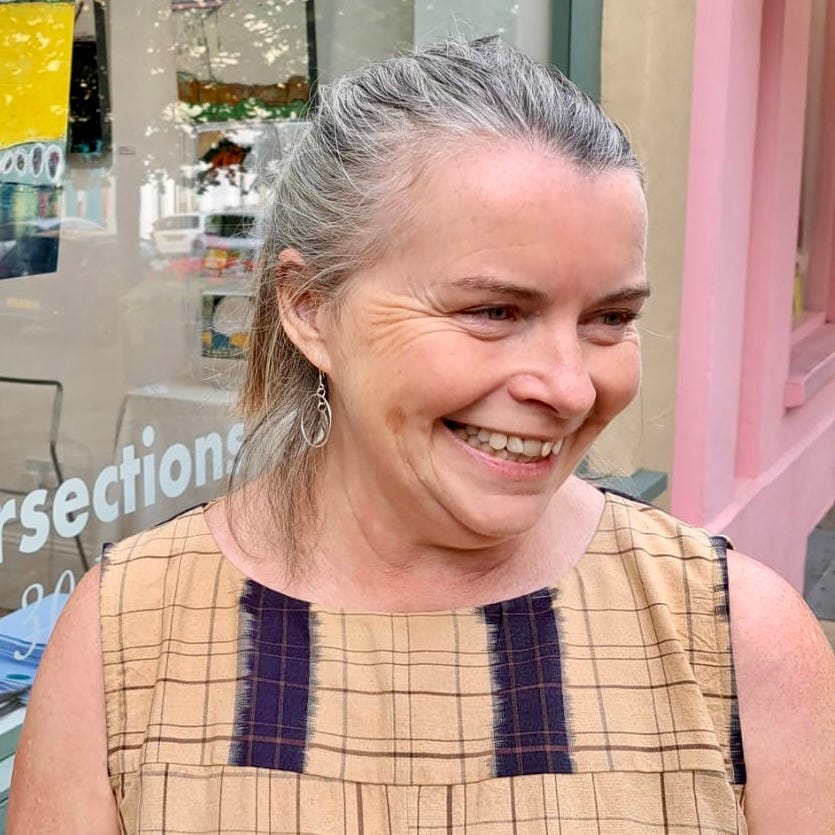
1. Can you give us a brief introduction to yourself and your work, what your primary art form is and how long have you been creating?
I live and work in the rural village of May Hill in Gloucestershire with a beautiful outlook towards the Malvern Hills.
I began as an encaustic artist (painting with pigmented wax using a heated palette and tools) mainly because this seemed to be something no-one else was doing and would allow me to offer something new to artist groups and galleries.
I still dabble with encaustic but I now primarily paint on wood with oils mixed 50-50 with cold wax medium (a thick paste-like consistency) to construct my semi-abstract paintings, characterised by expressive mark making, bold shapes and a tantalising surface texture.
Art was never my original career path. I took a Masters in Librarianship and subsequently got a job at the BBC in London as a News/Sports Librarian, and later as a Sports Producer, before taking time out to raise my two daughters.
In 2014, wanting to explore my creative side, I joined an adult art class run by a tutor at Malvern School of Art who encouraged me to sign up for their Access to Higher Education for Art. I took the plunge and enrolled in the full-time course for 2015/16 (made possible with childcare support of my mum and husband). This changed the direction of my life. At each stage of my new-found career I pushed myself out of my comfort zone. I had always encouraged my children with this mantra, and now realised it was time to listen to my own advice. Scary as this was, I found myself saying yes to things I would ordinarily have shied away from. So, in answer to your question, it all began in 2016.
After a huge amount of self-directed study and experimental practice - essentially learning on the job - whilst trying to keep self-doubt and impostor syndrome at bay, here I am in 2026. That’s 10 years, I’ve just realised!! Wow.
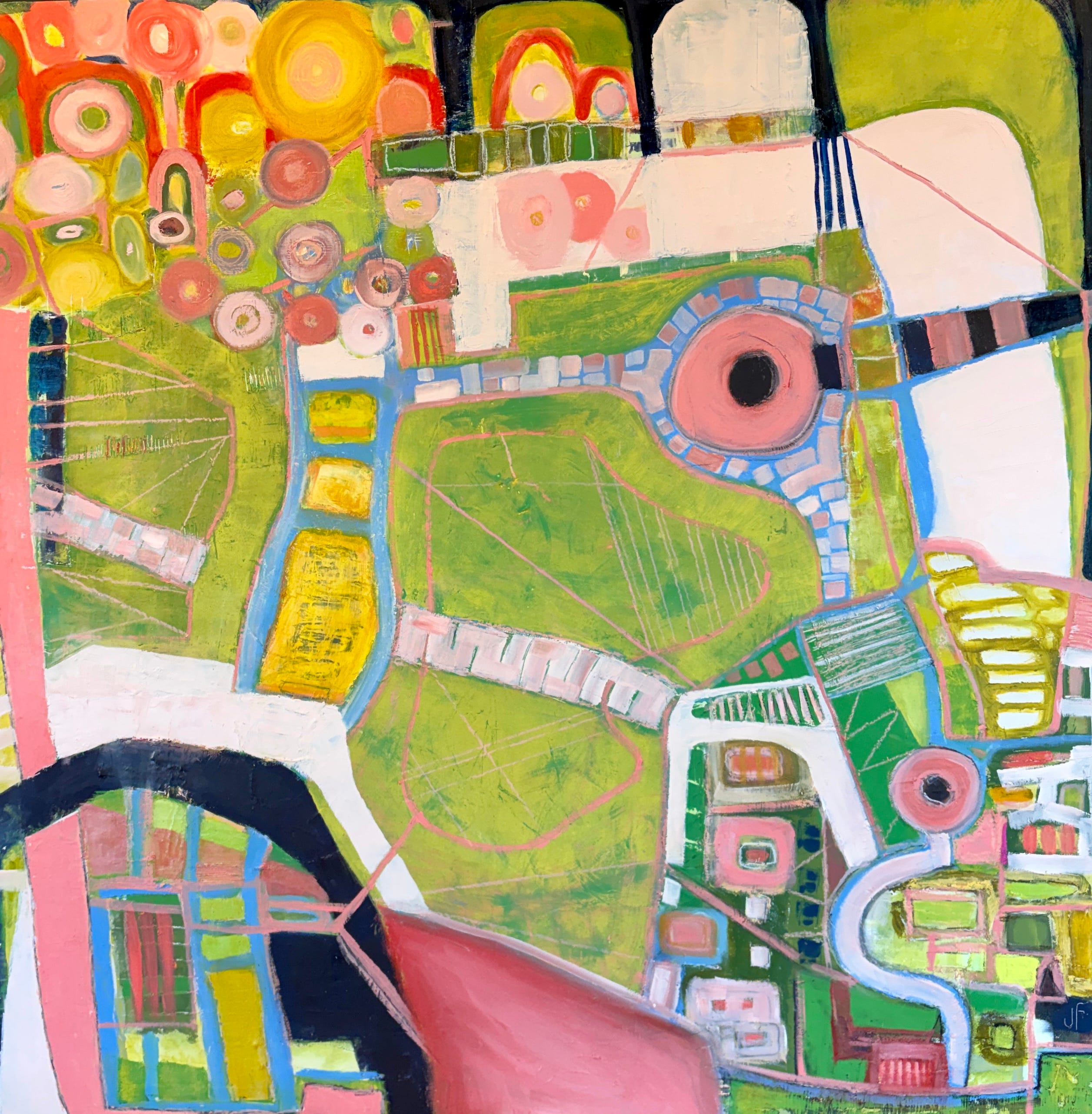
2. Are there particular artists, movements, or cultures that have influenced your work?
I enjoy learning about art history and immersing myself in exhibitions; finding artists - particularly ones who are women, and / or welsh - whose work I connect with is always very exciting.
I always love a mid-century or an impressionistic vibe, or careful colourist; I am also always drawn to portraiture.
I recently visited London to finally see Tracey Emin - A Second Life at Tate Modern, and also caught the first day of the James McNeill Whistler retrospective at Tate Britain. Both so, so good. Next on my list is Gwen John: Strange Beauties at the National Museum, Cardiff and to get to the Joan Eardley in Edinburgh and Cambridge for Frank Bowling at the Fitzwilliam Museum.
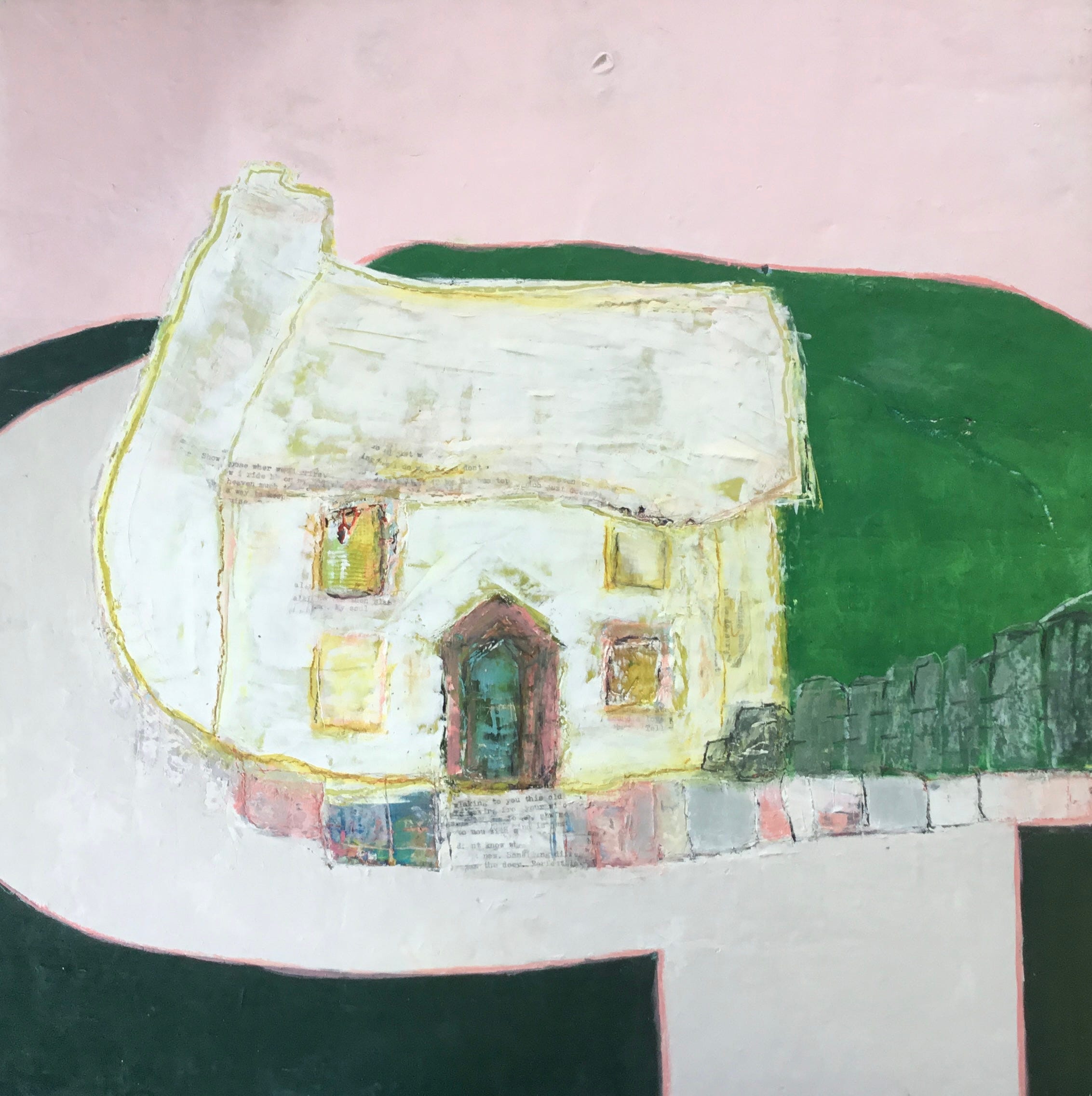
3. How would you describe your artistic style and the themes that most inspire your work?
Semi-abstract with expressive intuitive marks and bold shapes, lots of surface manipulation and texture.
I have difficulty finding the right words [that’s why I paint!] to describe my style, so I asked a collector:
“Your paintings offer individual stories with a blend of text, texture and humanity. We seem to find something new every time we look”.
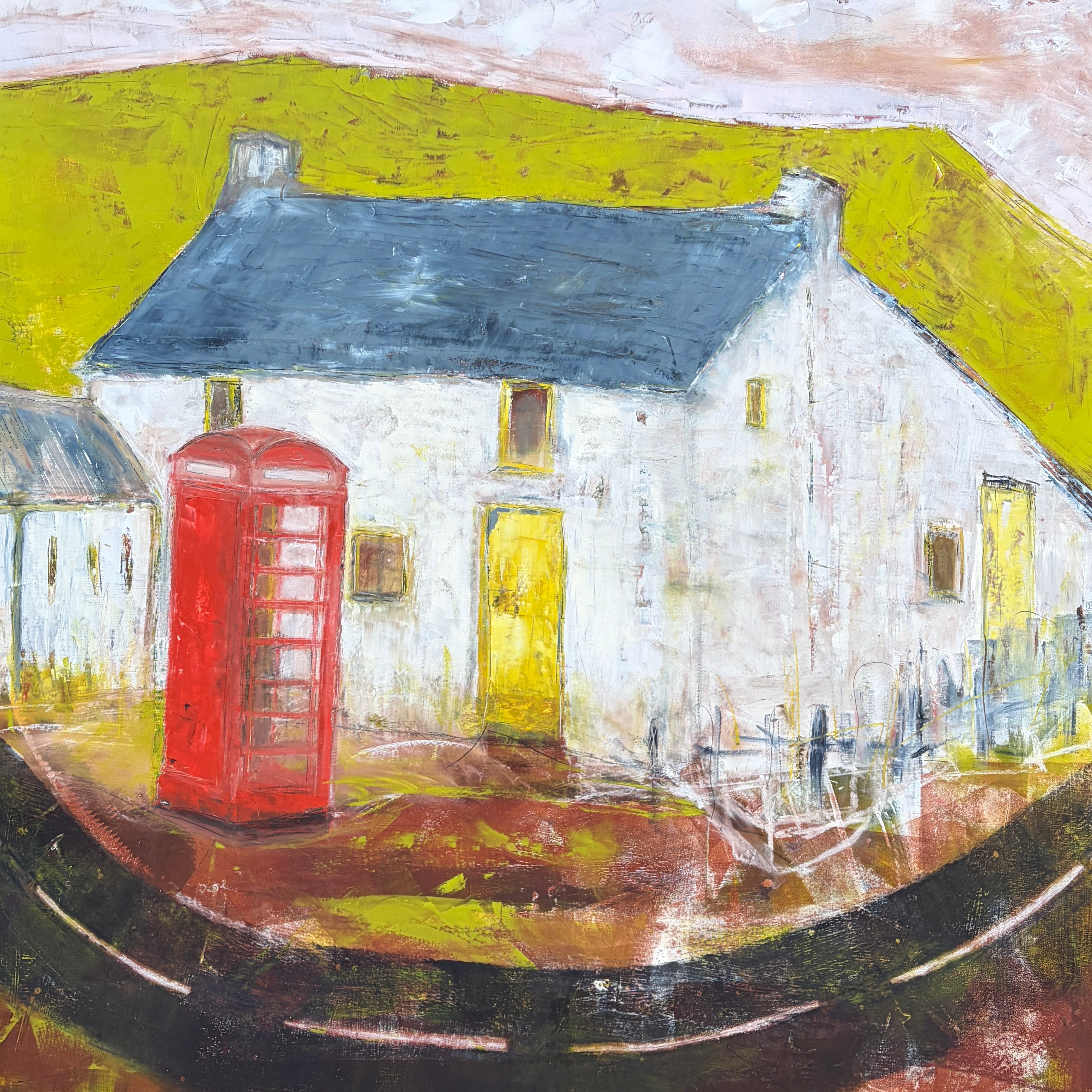
I like that. Themes that inspire? My welsh heritage inspires me the most - community, culture, the landscape (natural and manmade), ‘hiraeth’ [a welsh word with no direct english translation, best described as a deep, soulful, often unattainable longing for a place, person or past time]; a strong sense of place and the traces left by history.
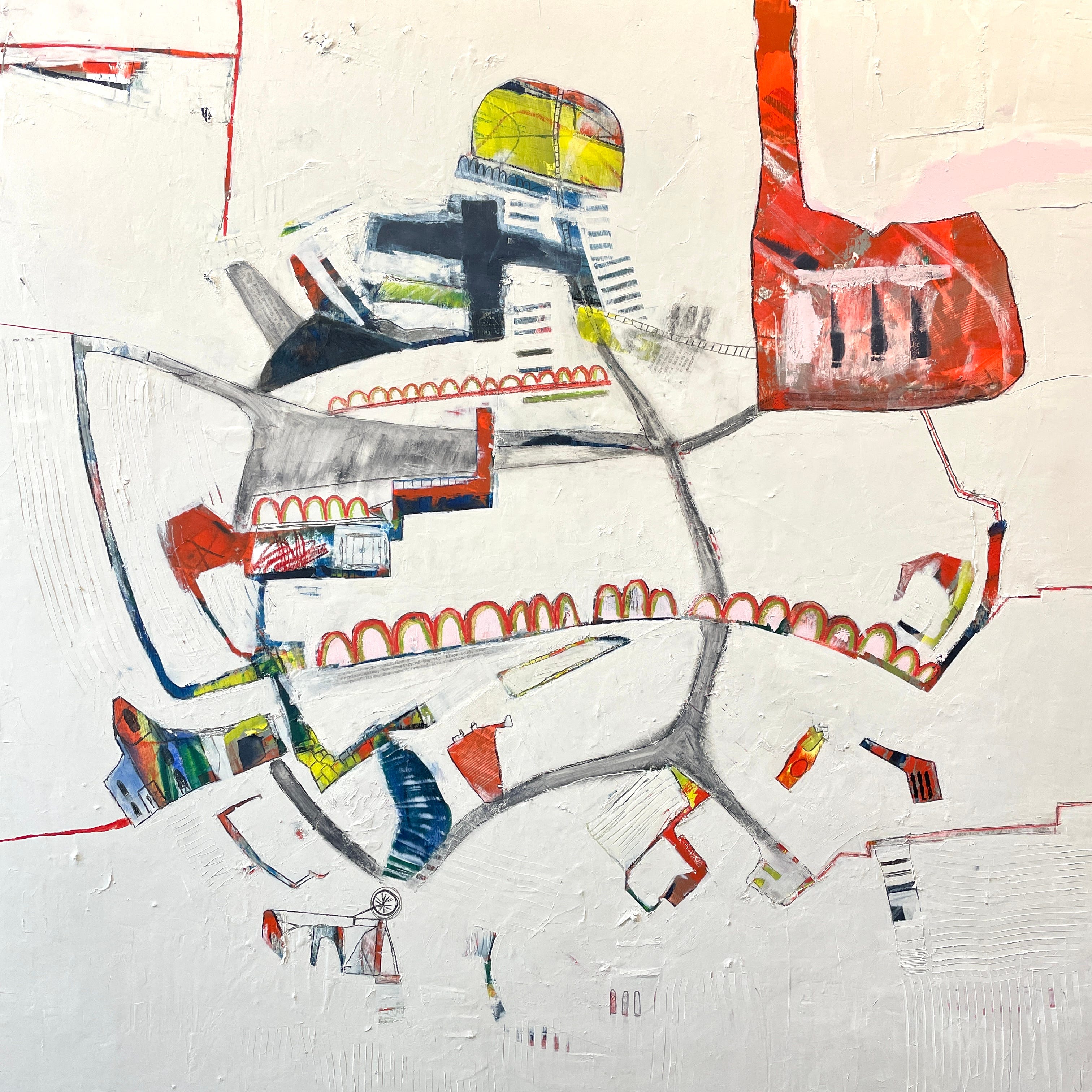
4. Can you describe a typical day when you are working?
I paint intensively for a period of between 1-2 months at the start of the year and again during July / August to create new work.
During these times I will get to my studio - a converted stable block in a paddock area of our garden - around 8.30 light an incense stick, water my plants, do 15-30 minutes of strength training or yoga, have a coffee. Put on music. Assess any paintings in progress.
Paint 2-3 hours.
Late breakfast or early lunch.
Paint 2-3 hours.
Admin / social media necessities interspersed as required.
Finish around 5pm.
On the non-painting months my time is spent preparing for an exhibition (promoting, social media, other necessary admin such as upkeeping my website) and exhibiting.
I look to hire galleries myself for a one or two week period in different parts of the UK.
5. What impact do you think current global or local issues have had on your recent work?
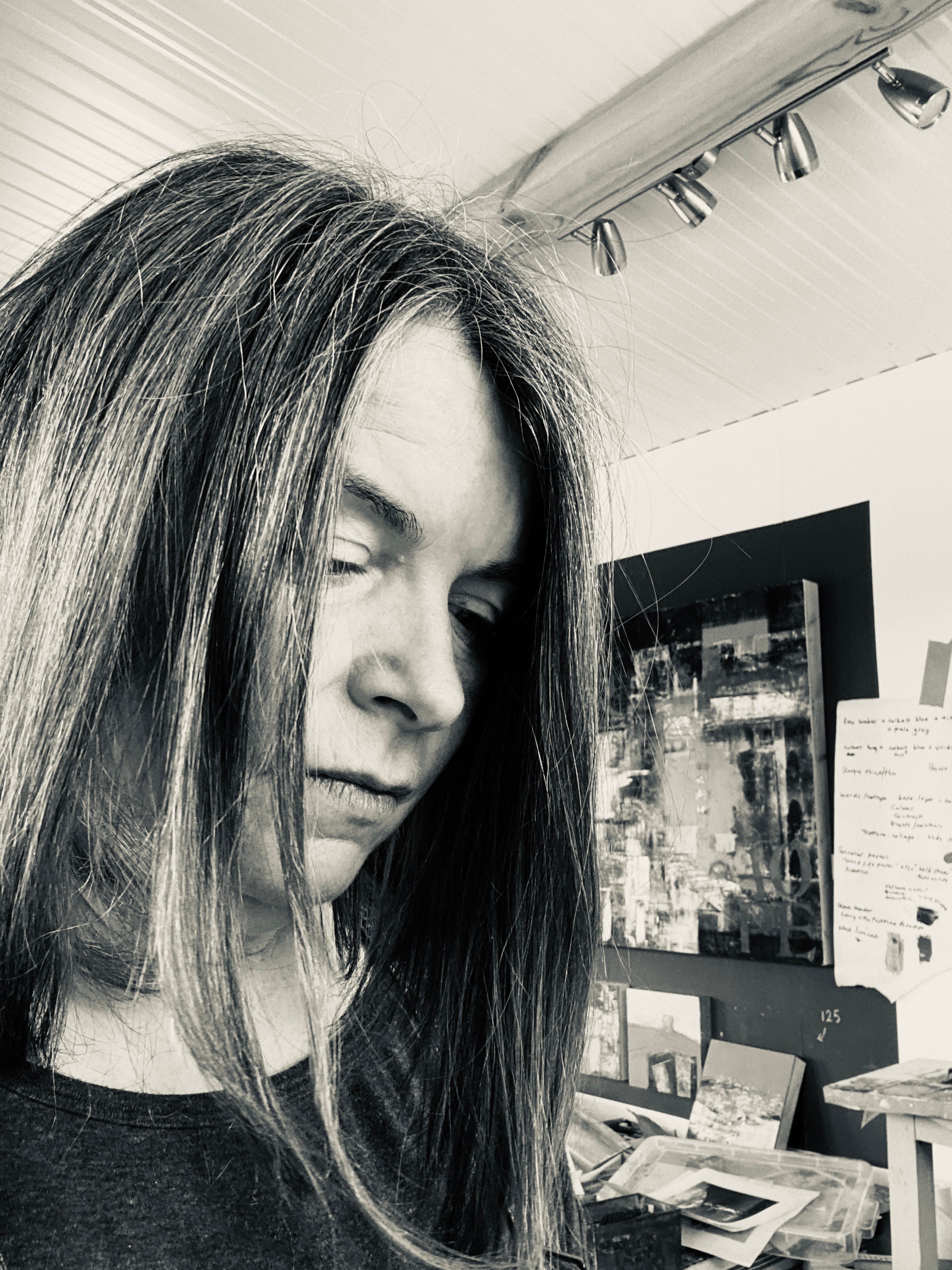
I read ‘The Beekeeper of Aleppo’ and it totally blew me away. It beautifully describes the human side of a perilous journey undertaken by a family, when everything they know and love has been destroyed by war, the only option is a perilous journey through Turkey and Greece towards an uncertain future in Britain.
I made a painting in response to this and submitted it to the Newent Art Competition and it won the first prize.


6. Can you walk us through your typical creative process, from idea to finished piece?
When I’m painting I always have a number of paintings on the go at the same time.
My workspace isn't massive so there’s a lot of chaos to the untrained eye.
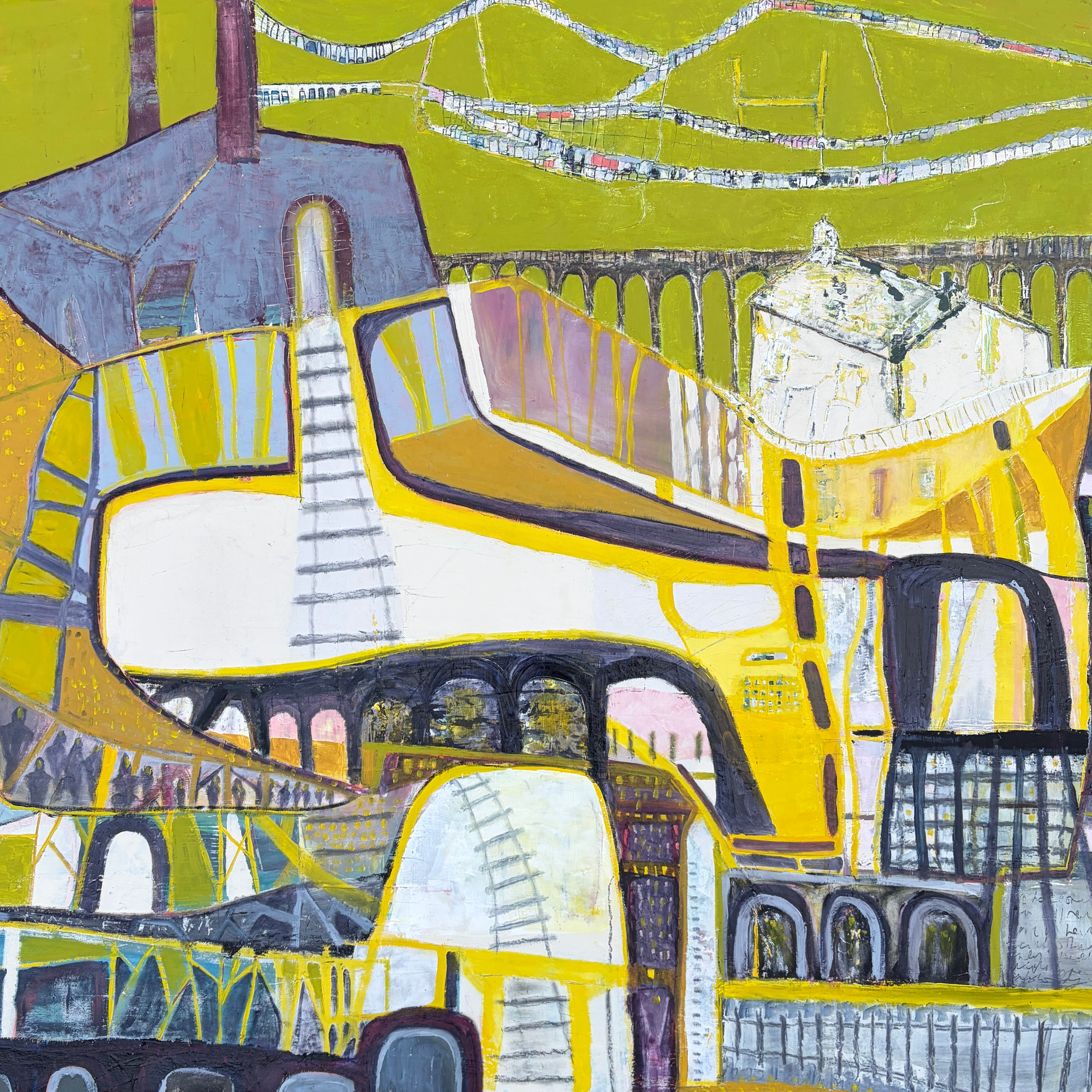
I work intuitively building layers (maybe 4-6) as a base. The first layers will be random marks and words using crayon, charcoal, art graf or chalk, whatever is to hand.
Not too much brain work here.
The next few will be all about playing with colour, shapes and patterns, applying oil paint mixed with cold wax medium with various tools (squeegees, rollers, brushes).
Then I start to build towards the final composition and colour choices but there’s a lot of too-ing and fro-ing here and a huge amount of brain work.
There’s a lot of removing of parts of the painting using pottery tools, awls and razor blades, and then rebuilding.
Motifs which recur in my work include pathways, overhead perspectives, field patterns, bricks, walls. They are not always intentional but find their way in.
Sometimes I might spot a hint of a person or a shape of a building, maybe a tree and I build on this narrative.
For the majority of the work I’ve done prior to this year I had little idea what the finished piece would look like, other than an engaging layered, tactile finish with contrast; this meant some pieces would take way too long to close down.
So for 2026 I had to have a word with myself about how often I would overwork a painting, lose the most engaging and spontaneous parts, then spend a lot of time getting the essence back - wasting a lot of paint, time and energy.
My focus for this year has been to be more disciplined and deliberate, taking time with decision making and the marks I create; maybe even focussing more on a subject matter, whether it is to be a landscape with a cottage underpinned with collage, or maybe buildings or with a more industrial slant, make use of old photos and paintings as reference to refine the ideas in my head. Trust earlier on what to keep and what to re-work. It’s been hard but is definitely a more rewarding way of working.
7. What’s next for you, are there any new projects on the horizon?
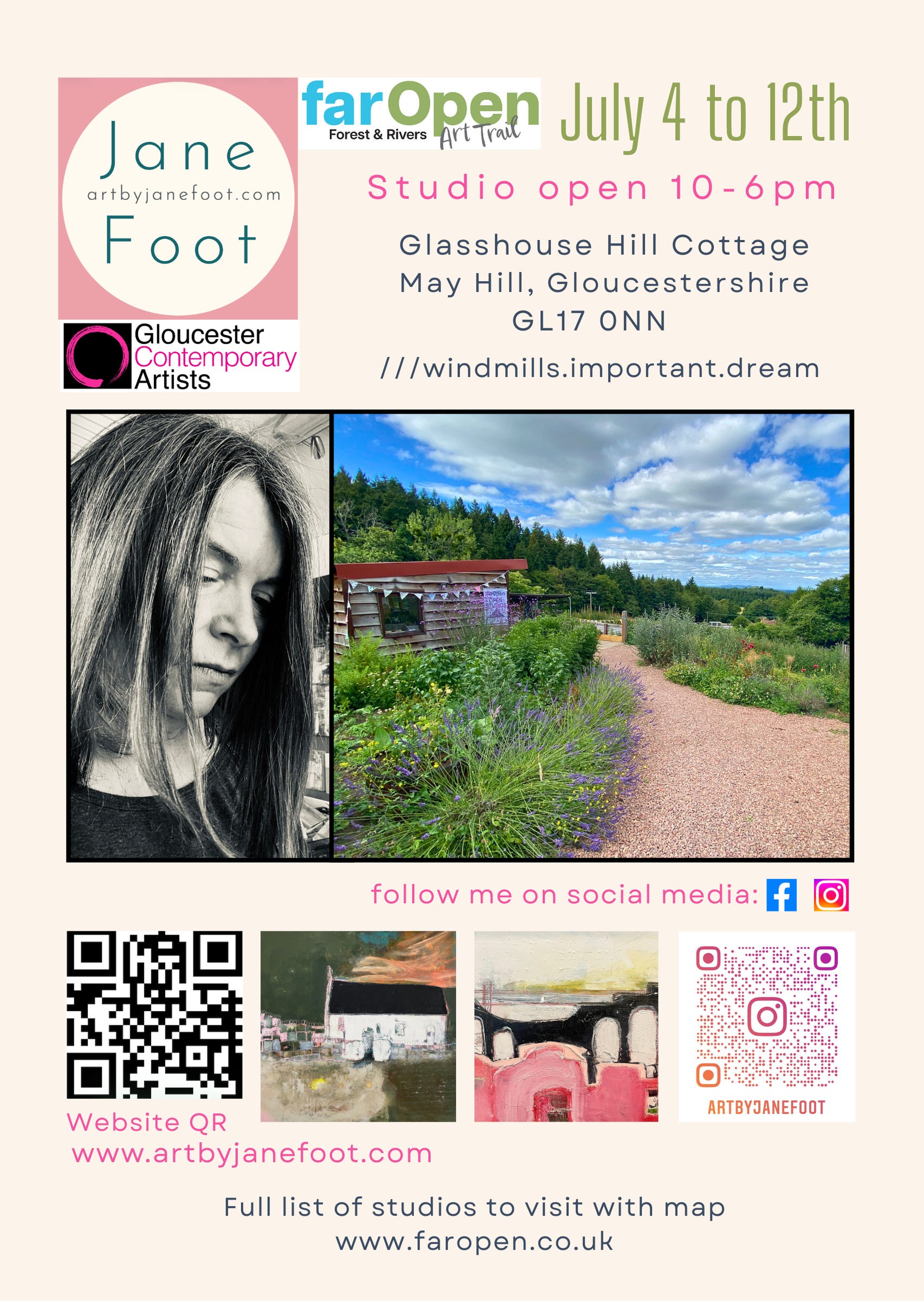
Next up is the annual farOpen Art Trail and Open Studio event which takes place across the beautiful Forest of Dean and Wye Valley from July 4-12th.
My Studio space is open 10-6pm every day, it’s located in May Hill, Gloucestershire and is open alongside 55 other spaces showcasing the work of 127 different artists in total.

I met Jane in person for the first time at Sixteen Gallery when we were dropping off artworks for our group show in Cheltenham and I put a face to the name of the artist whose works I’d been admiring for some years.
Where I pinball around various disciplines, illustration, watercolour painting and digital art painting. I can see clearly how Jane has carved out her own creative path and it appears to me to be more clearly defined.
A life with blocks of painting time, visiting Exhibitions of other artists and then putting on your own exhibitions is a life I could easily aspire to, going forward I think I’m going to try and ‘be more Jane’!
Do visit Jane, Studio 23 on the art trail and if you do, I’m not too far away at Studio 25, so come visit me too!
I’ll be back next month with another artist interview, in the meantime…

This was a delightful interview, and so nice to hear of Jane Foot. I'm way across the pond in Seattle, WA, and this is just fabulous to be able to meet artists this way. I also love to see the photos of beautiful rural locations such as this one, and be introduced to very different lifestyles than what I have known. Thank you both so much!